
Let AI have the bullshit jobs
The fake work has to die. Let the turmoil begin!

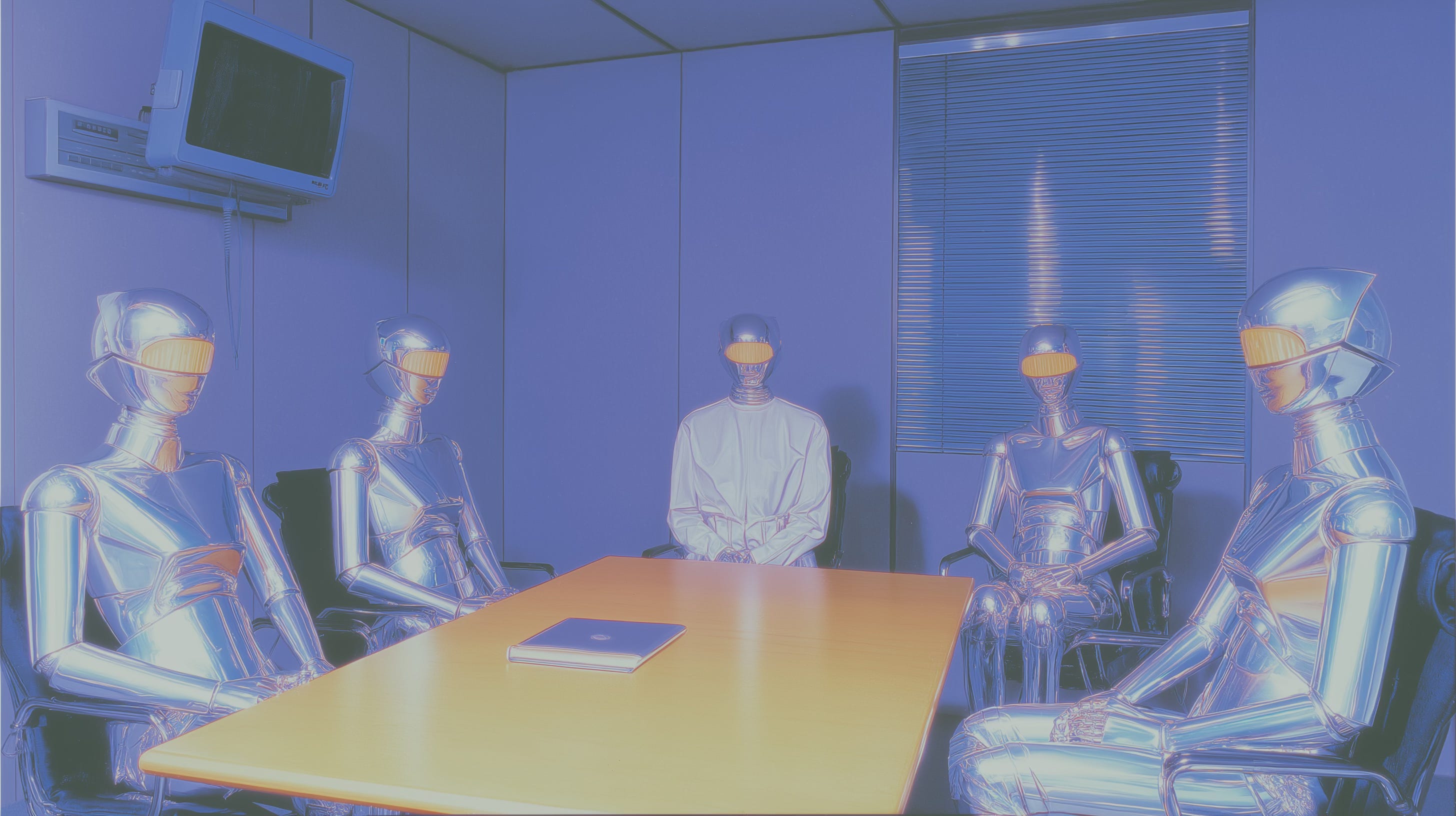
A friend told me of a meeting where 9 people spent 45 minutes deciding the color of a button on an internal dashboard that fewer than 20 employees would ever see. There was a slide deck. There were stakeholders. Someone had prepared talking points. A senior manager weighed in via video call from a hotel room in Düsseldorf, 14 seconds of buffering between each opinion. They landed on blue, my friend said. The button was already blue.
That meeting cost the company, conservatively, about a couple thousand euros in salaried time. Nobody made anything. Nobody fixed anything. Nobody learned anything. They performed the ritual of work, collected their wages, and went home.
AI should have done that meeting. AI should do all of those meetings.
What one keeps hearing, of course, from the professionally anxious: “But people need those jobs.” Yes. I’m one of those people. I write cover letters for roles I know are halfway to irrelevant, because rent exists and landlords don’t accept essays as payment.
Well, the fear is real. The rent is real. I’m not going to stand here and tell someone whose income depends on middle-management coordination that their panic is irrational. The transition will be ugly. People will lose jobs before the new structures are built to catch them. There will be a period, maybe a long one, where the old floor has collapsed and the new one hasn’t been poured yet. Sure.
But Goddammit, the jobs themselves are poison.
Most office jobs make no meaningful contribution to the world. The majority of the modern white-collar workforce is sleepwalking through tasks they know are bullshit, performing productivity for an audience of other performers, inside institutions that exist primarily to perpetuate themselves.
The bullshit is fractal. It goes all the way down. Spreadsheets feeding dashboards feeding reports feeding inboxes feeding nothing. Entire departments exist because dissolving them would require a restructuring plan, and the restructuring plan requires a committee, and the committee meets quarterly, and somewhere in the bowels of a fluorescent-lit office a man named Stefan is preparing a slide about it.
Bertrand Russell wrote a hundred years ago that the modern cult of work was a moral fraud. That most labor served no purpose beyond keeping the population too exhausted to think (as covered before). That a sane civilization would work maybe 4 hours a day and spend the rest on things that actually matter. He was mocked, naturally. Academics always are when they say something true too early. 100 years too early, it turns out.
And we’re supposed to protect this? We’re supposed to fight for the preservation of work that the workers themselves describe as meaningless? March in the streets chanting “save the senior synergy alignment coordinator”?
No. Let the machine have it. Let AI schedule the meetings and draft the memos and align the cross-functional stakeholders (whatever the fuck that means). Let it generate the quarterly business review and the 47-slide onboarding deck that every new hire closes after page 3. Let it have the whole rotting edifice.
Give the machine the performed work. The work that exists because someone, somewhere, decided that a human being sitting at a desk looking productive is more acceptable than a human being sitting in a park looking alive.
“Easy to say. What about the people who actually depend on those roles? Who feed their families performing bullshit jobs?”
As some of you know, right now I work in digital marketing. I produce content that algorithms consume and metrics validate and quarterly reports devour. I am the bullshit. I am inside the bullshit. I am typing this from the belly of the whale, fully aware that the whale is dying, fully dependent on the whale not dying.
That economic question matters, naturally. We need safety nets. We probably need something like universal basic income or some structure nobody’s invented yet that cushions the fall. The policy conversation is real and urgent. Honestly, at this point I’m ready to say: I’d rather have the turmoil than this boring pretend-machine. I can’t be the only one craving change no matter how disruptive it will be.
What I want to bury is the idea that the jobs themselves are worth saving.
They aren’t. They were never good. They were never fulfilling. They were a cope. A very elaborate, very expensive, civilizational cope that kept billions of people too damn busy to notice they weren’t actually doing anything that mattered.
Support my work with a tip.
All proceeds will be transformed into energy drinks and cigarettes.
You know what’s real work? A woman teaching her daughter to read, sounding out the vowels together on a Tuesday morning. A nurse holding a stranger’s hand at 3am because the morphine isn’t enough and presence is. An engineer staring at a whiteboard for 6 hours because the reactor design is wrong and she can feel it in her spine. A guy in his garage building something out of plumbing parts because the idea won’t leave him alone. Just taking care of people, kids, the elderly, each other.
Those things aren’t going anywhere. Machines can assist with some of them. They can’t replace the human hunger to do them.
What’s going away is the fake work. The scaffolding we welded around real work, built to swallow the surplus labor of a civilization that couldn’t figure out what to do with its people except keep them busy. The corporate theater. The professional pantomime.
I’ve said that before in these essays and I’ll keep saying it because it’s honest: I don’t know what comes after. Maybe the transition is 5 years, maybe 20, maybe it’s messy and uneven and different in Vienna than in Texas than in Lagos.
Somewhere, right now, 9 people are sitting in a meeting about a button. The button is already blue. The meeting will accomplish nothing. And every person in that room knows it, in their bones, the way you know a dream is a dream before you wake up.
Let the machine have the meeting. Let it have every meeting like it.
We have better things to do. We just have to re-discover what they are.
— Antonio Æstero
Support my work
If you believe the best of humanity is still ahead — this publication is for you.
Subscribe here on Substack
Share my work with family and friends
Check out my YouTube channel for some extremely weird stuff
Also, my IG and TikTok and X (also post the essays there)
Another excellent piece. I'm curious about you working inside the belly of the whale and reporting from within and how that feels on a daily basis. Are you sometimes anxious your colleagues will discover your Substack? Would HR have a fit?